
BestSwitzeland.com provides information about Directory of Swiss business, Business and Economy, travel, health, society and culture, entertainment, recreation and sports, education and more.
Home
Contacts
Submit Site
Home About Us  

Overview of Switzerland Finance & Banking Jobs

In the first Quarter of 2010, the number of jobs available in the Swiss financial sector was around a total of 3,508 jobs. This is an increase of 19 percent over the same quarter in 2009. From the latest report by Finance & Operational Recruitment (FOR) the number of job vacancies in the Swiss financial sector has increased since the summer of 2009 by 35 percent.

Based upon a total of 1,400 banks, insurance companies, accountants and other consultants currently there are 3’508 finance jobs are advertised. That is 35 percent more than in June 2009.

Across the banking sector banks in Switzerland had a total of 1,457 jobs at the end of March 2010. This is 110 percent more than in June 2009.

In Insurance we have seen a slight decline. Across the insurance industry, including health insurance, in the summer of 2009 there was 1,086 open insurance jobs. At the end of March 2010 this had declined to 1,016. This represents a decline of -6.4 percent.

Across the other financial sectors & support industries (Accounting, consulting, IT, etc.) jobs have increased from 819 to 1,035 (+26.4 percent).

The main reasons for this development, is the banks are replacing staff originally cut when they had to reduce costs – during the previous 2 years. For many insurance companies, cost cutting is ongoing. In addition, increased regulatory pressure meant additional experts were necessary.

The report used an index which shows the evolution of online Switzerland job vacancies in the financial sector in Switzerland and Liechtenstein. The index is produced every three months by the Swiss financial portal finews.ch with data of the portal JobDirectory.ch.

Switzerland Banking Jobs in focus:

Most banking jobs were offered in late March 2010, Credit Suisse, with 395 jobs, followed by UBS with 336. While at Credit Suisse, the demand last year grew more constant and rose sharply from 2010, at UBS as early as October 2009, there was a significant increase which lasted up to February 2010.

Foreign banks are recruiting

Coupled with this the Foreign Banks in Switzerland are recruiting for banking jobs. This increase reflects recruitment having a high turnover, but also the fact that many institutions consider the adjustment in the private banking as an opportunity to recruit good people.

Swiss Banking looking to the customer:

Almost two-thirds of all vacant banking jobs in Switzerland are for specialists and executives. Only ten percent of the jobs are for employees on the level of clerk or assistant.

The greatest demand for workers is at the customer front. The most common available banking job is for Account Managers in the retail and SME business, followed by Investment advisers in the so-called affluent area (average retail segment).

In relative terms, the number of classical Private Banker -which to serve wealthy clients has grown the most. Since summer 2009, the number of private banking jobs presented has increased from 19 to 45, representing an increase of 140 percent.

Overall – good recruitment growth:

In the first Quarter of 2010, the number of jobs available in the Swiss financial sector was around a total of 3’508 jobs. This is an increase of 19 percent over the same quarter in 2009.

Tags : , ,

Travel Trends – Switzerland

Switzerland is more than skiing!

Many people only visualize ski slopes when they hear Switzerland; however this country has much to offer beyond the slopes in the urban cities of Zurich, Lucerne and Lausanne. These cities offer wonderful and interesting art, colorful old towns and beautiful waterfront settings worthy of a visit on your way to the slopes.

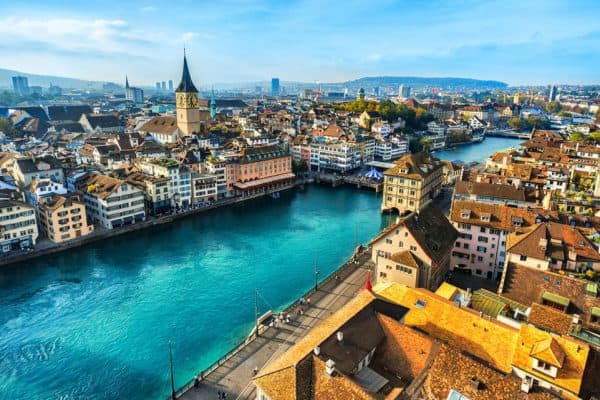
Zurich is located in the north and is Switzerland’s largest city and a major transportation hub. Like most Swiss cities, Zurich visitors and residents alike enjoy a huge body of water, Lake Zurich, provides the opportunity for romantic walks, bike rides and cruises. A great way to see the town is on a riverboat which functions similar to a city bus.

Known as one of Europe’s most “fountainous” cities, Zurich is sprinkled with more than 1200 fountains, a stream of cafes and streets with a
colorful ambiance. One of the city’s art treasures is a set of Chagall stained-glass windows depicting Bible scenes located in the Fraumunster

Church in the center of Zurich.

There is no better way to enjoy a beautiful sunny afternoon than to stroll through Backer Park which is considered to be one of the most beautiful and lush in all of Zurich. Once you have had your fill of the outdoors, head to the very interesting Indianermuseum where you can trace the history of the Native American culture. For a different type of culture, go over to Langstrasse, Zurich’s red light district. As dusk falls, it is great to stop for a drink at Long Street Bar or get in a few laughs at Volkshaus Zurich comedy club.An hour south of Zurich lays the beautiful city of Lucerne. A covered, medieval Chapel Bridge forms the centrepiece of the city’s townscape and is considered to be one of the oldest, covered wooden bridges in Europe. Approximately 100 colorful paintings, some replicas and some dating from the 17th century, hang under the bridge’s rafters, showing scenes from Lucerne’s history. Swans often cluster near the bridge and locals will tell you the swans arrived in the 17th century as a gift from Louis XIV in appreciation for the protection the Swiss Guards provided him.Historic houses are decorated with frescoes which line the numerous picturesque town squares such as ‘Weinmarkt’ square.

Picasso fans will want to see Lucerne’s Rosengart Collection which showcases several dozen black-and-white candid photographs of the artist.

Here you will see Picasso in the bathtub, getting a haircut, playing dress-up and horsing around with children.

Lucerne is a city of town squares and churches. The Jesuit church dating from the 17th century is regarded as Switzerland’s first sacral Baroque building and the twin towers of the Hofkirche form an integral part of the townscape. The figure of a dying lion which was chiselled from rock in remembrance of the heroic death of Swiss guards killed during an attack on the Tuileries in 1792, is one of the best-known monuments in Switzerland.

Tradition and modern life stand side-by-side with ease in Lucerne, as the town has also earned a reputation for itself with innovative design. The futuristic Culture and Convention Centre, the KKL, designed by leading French architect Jean Nouvel, is one of the architectural highlights of the town. The Center is also a landmark of Lucerne and a venue for a wide variety of cultural events throughout the year.

Lucerne is the ideal starting point for many excursions to the highlights of central Switzerland. A trip up one of Lucerne’s regional mountains, the Pilatus or the Rigi – the queen of mountains – is a must. But excursions up onto the Stanserhorn, or a steamship cruise on Lake Lucerne with its many bends and arms are worthy experiences.

The Wilhelm Tell Express originates in Lucerne and ferries its passengers to the foot of the Gotthard pass via Lake Lucerne and then continues by rail into Ticino, south of the Alpine ridge. The “cherry road” leads from Lucerne through the landscape of cheery trees.

Lausanne is perched elegantly above Lake Geneva and has been home to the International Olympic Committee since 1915. The museum here
displays a colorful history of the games complete with a century of ceremonial torches and medals. The evolution of sports equipment is evident here containing Carl Lewis’ track shoes and Sonia Henie’s ice skates.

Lausanne’s city centre spans several hilltops, linked by bridges spanning deep, river less gorges. Place St. Francois dominates the hilltop district known as the Bourg, formerly the wealthiest part of the city and still known for its upscale markets and boutiques. To the north the hill of The Old Town, crowned by the Cathedral, dominates the city. Expansion during the nineteenth century broadened the city scope to the east and west. The pedestrian walking zone lies north of the train station and provides great entertainment for shoppers and locals alike.

The waterfront area is the happy domain of commoners, office workers and roller skaters. The locals nicknamed their town the San Francisco of Switzerland for all its hills as it seems to be a trek each direction.
If you are a shopper, items to purchase in Switzerland may include pottery, watches, crystal, embroidered items, wood carvings, clocks (including cuckoos), Swiss army knives, liquors (Williamine, the best thing that can be done with a pear), lace, textiles, folklore souvenirs (such as music boxes), cowbells, cheese, antiques, stainless-steel cutlery, ski equipment and clothing, leather goods, shoes and of course chocolates!Whether you enjoy displays of modern art or wish to explore Old World charm, the cities of Switzerland seem to have it all. While most people come to enjoy, explore and ski the alpine peaks, there is more to this country to be found in its glorious urban areas.

Tags : , ,

 
© Switzerland Blog :: Business & Economy